Category Archives for "News"

How Does Engaging From The Start Help With Email Deliverability?

“How Does Engaging From The Start Help With Email Deliverability?” is a question we often get asked.

This is generally in response to our recommendations for engaging with subscribers as one way to improve your email deliverability. (You can learn more about email deliverability here.)

Let’s take a step back for a moment.

You probably already know that email marketing can be an excellent way to build your business and to make sales, and repeat sales. How many times have you heard people say, “The money is in the list!”?

Yet so often business owners focus on building their list – that is, they focus on getting as many names and email addresses as possible on that list – but the money doesn’t follow. There can be several reasons for this (each of them easily overcome, by the way), but two common reasons that go hand-in-hand are a lack of engagement and problems with email deliverability.

Before you can start making money from your list it’s essential to build a relationship with them. You need to build rapport and earn your readers’ trust. Most are unlikely to buy from you before they know, like and trust you.

One of the best ways you can do this is to begin engaging with them as soon as possible. Don’t wait until you’ve got a ‘big list’ first.

Don’t wait until you have more time to create perfect content.

Start now.

Start as soon as you have 1 subscriber.

What exactly is engagement?

When we refer to ‘engaging with your subscribers’, the best way to think of it is to have a conversation with them and encourage a reply. Interact with them.

Your emails should be a good combination of the following:

  • helpful, relevant information
  • new products or services that might be beneficial to them
  • special offers, deals or sales
  • news and updates
  • staff, store or industry updates
  • feature products
  • feature stores or team members
  • celebrations and wins… by you, your business, your team or even other customers (with their permission).

The main thing is to send information that your subscribers will find helpful and relevant, without always sending promotional information. By the same token, you don’t want to always send non-promotional information either.

Mix it up by always keep it relevant.

Then importantly, encourage subscribers to reply with their feedback, ideas, success stories and questions.

After all, your engagement shouldn’t be one sided. Just like a face-to-face conversation, it’s easier to get to know what your subscribers want – and for them to get to know your solutions to their problems – when it’s a two-sided conversation.

Why start the conversation so early?

There are two main reasons why you should begin email engagement from the start.

1. Build the know-like-trust factor early

We’ve already established that this is a good way to help you build the rapport and trust you need quickly. But just imagine if you met someone you were interested in, gave them your name and number (or email address), then… crickets.

They don’t call.

Or message.

Or email.

You don’t hear a word from them.

Then one day, completely out of the blue, you get a message asking if you would like to go to such-and-such event with them tomorrow.

It would seem a bit strange, right?

Heck, you may not even remember who they are, let alone know them well enough – or trust them enough – to want to attend this event they’re recommending.

Yet so many people don’t email their subscribers for days, weeks or even months. Then out of the blue they start emailing them, asking them to buy their new product or come along to such-and-such event.

Then they wonder why they get ignored and don’t get many, if any, sales.

Often times they then decide that this email marketing doesn’t actually work. When the truth is that email marketing is incredibly effective… WHEN IT’S DONE CORRECTLY.

2. It helps your email deliverability

The second reason why you should begin engaging with your subscribers from day one is because it helps with email deliverability.

As you may well be aware, more and more emails are getting caught in spam filters, especially when they’re promotional or marketing emails.

One of the strategies that helps get your emails into your subscriber’s inbox is when they interact with your emails. That is, when they click a link in your email or, better still, when they reply back to your email.

The email providers see this as a conversation (exactly what we talked about earlier, right?). This shows them that you’re most likely a legitimate and trustworthy contact.

Which means… future emails from you are more likely to go directly to that subscriber’s inbox, rather than to their junk, spam or ‘other’ tabs.

So if you can begin this engagement right from the very first email, then keep it going to some degree long-term, you will most likely find that your overall email deliverability is higher.

Over time, you’ll find that subscribers will generally fall into one of three categories:

1. They’ll love hearing from you and engage frequently. These subscribers are most likely to become your customers and repeat customers.

2. They’ll self-select and decide they’re not a good match for what you’re offering and unsubscribe from your emails.  

3. Or they will lose interest over time and will gradually interact with you less, although won’t unsubscribe.

Obviously you want more of those in #1, above.

But what about the rest?

Well, for those in #2, that’s great. Don’t be upset when someone unsubscribes from your email list. If they’re not a good match for you and simply begin to ignore your emails, or worse still mark your email as spam, that’s going to affect your overall email deliverability.

So it’s far better that they unsubscribe. Let them go and wish them well.  

And for those in category #3 – these subscribers may or may not still be interested. But if they remain on your email list without ever engaging, they may be harming your email reputation. So you ideally want to move them to one of the other categories.

You can do this by sending a series of “re-engagement” emails. If they are still interested, they’ll re-engage with you. But if they’re not, then you may want to stop emailing them. We’ll go into more detail on re-engagement in another post.

The main point is, you only want people on your email list IF they are engaged. If they’re not really interested in what you have to offer, it’s better for you – and THEM – if you don’t email them.

So ask yourself if you truly engage with your subscribers.

If yes, great!

If not, now’s the time to start. Actually, the day you got your first subscriber was the time to start. Today is the next best time. J

Oh, and by the way, remember that saying we mentioned earlier, “The money is in the list!”?

Well, that’s not entirely correct. The true statement is “The money is in the ENGAGED list!”

I’ve seen many smaller lists with 1,000 or less ENGAGED subscribers make a lot more money (and with happy customers) than from some lists of 100,000+ unengaged subscribers.

If you're interested in knowing more about how we can help your business why not book a free call with us today?


How To Automate Personal Engagement In Your Small Business

how to automate personal engagement

A few years ago I came across a tool that helps me to automate personal engagement in my business. It’s not 100% automated, but to do so would take out the personalisation factor that’s essential here.

Watch this quick video below where I explain all about what this tool is, how to use it, and what a huge impact it can have when it comes to engaging with your customers (or potential customers) and your bottom line:

I want you to write this down…

It’s called Bonjoro.

This is the most wonderful tool I have seen in the last five years, other than Keap and Infusionsoft, of course.

In recent posts I shared with you the 3 biggest mistakes that many businesses are making when paying for leads and the process you need to set up to get the best return for this expense.

Mistake #1 is having no follow up process in place.

Mistake #2 is not having a Call To Action.

And Mistake #3 is not tracking your leads.

So in correcting those 3 mistakes we've got all this process where we're following up with customers and we're sending some videos and this sort of thing. We're trying to make it as personal as we possibly can.

Bonjoro is this app that sits on your phone or sits on your computer. It connects up to your marketing automation system. When someone opts in to your lead generation, we can trigger across to your phone in the Bonjoro app and you swipe it and say something like:

“Hey so-and-so, it's Jason Buckner here from Automation Made Easy. It was really cool to see that you've downloaded my free report on such-and-such. I just wanted to touch base with you and say hi and one of the really cool things that we're finding to [give away a little bit of helpful, relevant information and start developing the relationship straight away.] Anyway, I hope you like the eBook and look forward to hearing your results. Any questions just hit reply and let me know.” 

Do you reckon you'd feel pretty good about your provider if they sent you a personal message like that?

Do you think it’s a good way to start developing a relationship? One hundred percent it is!

I tested Bonjoro out about three years ago on four quotes. I had four quotes that were dead in the water, so to speak. I'd called them. I'd emailed them. I'd SMS them. I'd left messages. I'd followed up three times, gone through this whole process. And I thought, you know what, I'm going to test this out. I'm going to give it a go.

So I sent each of the four of them a video. One of them got straight back to me after he got the video and he said, “Look terribly sorry. I'm not going to go ahead with this.” But I got a reply, which I hadn't got a reply to anything else.

Then the next one I sent to, she said, “Oh my God, thank you so much for sending me a personal message. You know what, I do need to go ahead with this. How do I book in another call so that we can get it sorted?”

Then the third one booked in and became a customer again.

And then the fourth one didn't reply.

So three out of four people replied and two out of those four people – they were dead quotes, remember – came back to me and ended up becoming customers from that exercise.

I hadn’t even paid for Bonjoro yet. It was the free version of Bonjoro and it made me $10,000 just by following up with four people, spending about 30 seconds for each video and sending it out to them. And about maybe an hour or two hours to set it up and get it operating the right way and I made $10,000.

Who wants to do that in their business? One hundred percent!

So the trigger comes to your phone and you can send a personal message. I don't sit here waiting… “Is someone going to opt in? Is someone going to opt in? Is someone going to opt in?”

I just let it go. And for 15 minutes a day, I get onto my phone and I swipe the Bonjoro app and I talk to whoever has gone through. I've used it for event registrations to get people to come along to events and I've used it for so many other things. And the value is so good. The reply I normally get is, “Oh my God, I can't believe you sent me a personal message. This is really cool. I want to do this in my business!”

And so many replies like that, just from the convenience of your phone.

If you're ready to take action and start getting all the paying customers you can handle from your paid ad leads, book a call with us today. 

We'll help you create a step-by-step plan to implement the necessary steps in your business and fast-track your results.

The Third Biggest Mistake Small Businesses Make When Paying For Leads

lead generation mistake

In previous posts we’ve looked at the two biggest mistakes I see businesses making when it comes to paying for lead generation.

Mistake #1 is that they have no follow up process in place.

Mistake #2 is that they have no clear Call To Action (CTA) – or no Call To Action at all.

In this video I’m going to walk you through the third biggest mistake businesses make when paying for leads:

Mistake number three is not having tracking on those leads.

So it's all very well and good so far… these leads come into your business and they go into the campaign and there's some follow up emails, there might be some SMSs. (There are going to be some SMSs, I can tell you that right now. We'll come to that in a little while.) There's going to be emails and SMSs, and there’s stuff going out.

The leads are sitting in this campaign and all of a sudden do we really know what's happened to them?

Some people book in for a sales call, some people do a quote request, but what happens to all of the others? And all of a sudden, I don’t know where they are. I don’t know what's going on with them. They've gone into this list but I don't really know what to do with them. I don’t know where to find them… nothing happens… not many sales come out it.

Anyone felt like that before?

So I want you to picture this…

When someone registers, they go into a list and they start getting the emails and they start getting some follow in there. They start going into this campaign where we built this trust and we get them to take the action that we want them to take.

And then we always collect telephone numbers. You'll see why here for a couple of reasons.

First, I'm in the business of automation and I want to be sending them SMS as a first point of call.

Second, I'm in the business of automation and basically I get a lot of tyre kickers when I get opt-ins. So I make them give me their telephone number. If they register for a webinar, if they register for a lead magnet, if they register for anything, I make them give me their telephone number because those people that don't are less qualified than those people that do.

My cost of lead goes up much higher, but I get better conversions from the leads that come in because I have their telephone number.

Now, this is the important thing. When they engage in content – they click to download or they click on one of the videos – when they engage, I put them into what's called a sales pipeline. They’re pre-qualified, okay?

So these people have engaged in some of my content. I have that automatic follow up if they engage, but then this is the next step. They go into the sales pipeline pre-qualified. I make sure I have their telephone number – that’s super, super important. (That'll make sense in a moment.)

For those people that book in, the most qualified people booking go into “qualified” in the sales pipeline. (I’ll show you what I mean in a moment, it's all very visual.) And I get to make those calls first because they're the people that have identified, “Yes. I want this. I want to get onto a sales call with you.”

Then I call the pre-qualified people. That makes a little bit of sense, doesn't it?

So let's have a look at this example:

biggest business mistake paying for leads

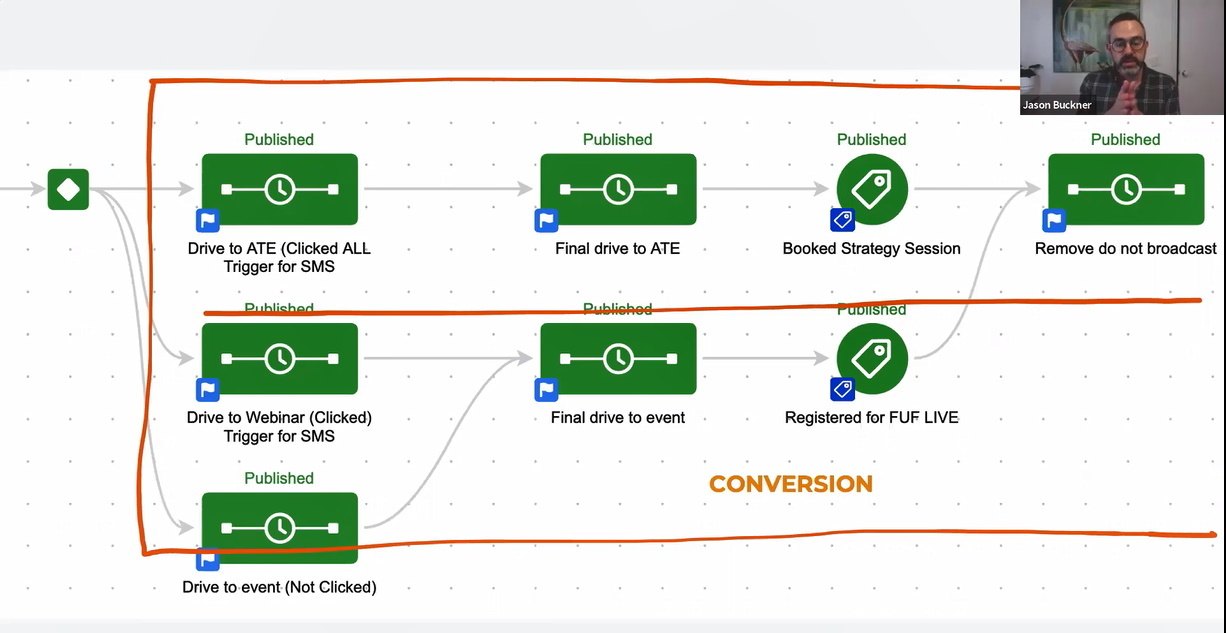
So once someone has downloaded the book and they've clicked on one of my videos, we automatically put them into pre-qualified. So that's the first section in the image above.

Then when someone's booked in for a sales call, we automatically then put them into our sales pipeline. They automatically go into the qualified and booked section. These are people that are in there and we can see at a glance exactly how many people have gone through the process and self qualified themselves.

And when we're on the sales call, we’re talking to the person and they're potentially going to be a customer, we put them into this converting phase and then we put a value in there.

Then I can see in the pipeline, all of a sudden, the potential earnings from this lead generation campaign that we've got going on.

So then when you've made all of those calls and you've put them into Converting or Won or Lost, what do we do?

Do we sit back and think, “Oh, this lead generation campaign's not really doing much. We've only got two calls booked. What am I going to do next? Am I just going to leave the other leads just sitting in there?”

No, absolutely not, because they're pre-qualified because we've collected telephone number.

What do you think we're going to do these pre-qualified people over here? We are going to get on the phone and we're going to try and either qualify those people, get them to book in a sales call, or have a sales call with them on the phone straight away.

Does that make sense? In actual fact, does it make sense not to be doing this?

You 100% can't afford to not do this in your business and just let the rest of those leads go.

And these calls don't necessarily have to be a direct sales call. It could be like, “Hey, I noticed you downloaded blah, blah. What do you think of it? What problems are you having that you need to know about doing such-and-such better in your business?”

It becomes an interactive kind of process where we are not necessarily selling to them, but we are finding out what the problems are so we can provide them with solutions there.

Can you afford not to be doing this in your business?

I don't think so.

We have to think about what we can do to make our business stand out more than everybody else's. We have to think about “What can I do with these leads that I'm paying for to come into my business, to get the most out of them?”

And this is just one technique that we can use to make sure we are making the most out of them. Don't sit back and wait for it to happen, be proactive and make this happen.

Join Our FREE

100% LIVE Masterclass


The 3 Biggest Mistakes You're Making When Paying For Leads…

That Are Costing You Thousands.

Want more useful strategies on how to avoid the biggest mistakes small businesses make when paying for leads?


Then click the button below now for full details and to register to attend our FREE live webinar:

The Second Biggest Mistake Small Businesses Make When Paying For Leads

In a recent post I shared with you the biggest mistake that I see small business owners making when it comes to paying for lead generation. There’s also another major mistake that many small business owners are making over and over again and it’s costing them a fortune in lost revenue from their lead generation.

Here’s a quick video for you where I explain what this second biggest mistake is and how to fix it:

Mistake number one was no follow up. And mistake number two is no clear call to action.

The second biggest mistake I see people make is no clear call to action.

What is the focus of your campaign?

Why are we paying for leads?

Why are we getting people to opt in?

So we've got to know what is our ultimate goal?

What do we want people to do at the end of this?

And it's not just get into our database so we can become customers and become related to them because that's not going to happen.

We’ve got to have an ultimate goal… and we have to know what that ultimate goal is.

Is it to book in a sales call?

Is it to register for your webinar?

Is it to buy your product?

Whatever it is, you've got to know what it is and you’ve got to know exactly what that process is.

The Second Biggest Mistake Small Businesses Make When Paying For Leads

Now in my campaign, I do it a little bit trickier. All you need to worry about is having one clear call to action in your campaigns to start with.

But for me, my sales process is on a webinar, but when someone opts in for my e-book and they're engaging with every single item of content that I've got in that campaign, then they're qualified. And so because they’re qualified, I want them to go in and book in for a call straight away.

Ultimately, my goal here is for them to book in for a call and that's what the webinar does. The webinar gets them to book into a call.

So if they've engaged with everything I want them to book in for a strategy session and that's ultimately the goal. But if they don't engage in all of my content, they're not qualified enough yet.

They've got to go and do my webinar training first.

And so the other call to action, if they don't engage in all of that content, is that we to get them to come along to the webinar.

So where should we have our call to action in the campaign?

Now, as you can probably tell, I'm going to have a few more details here, but where should we have our call to action?

Where do you think the key times and places in a campaign from (referring back to our mistake #1 video) when someone opts in to when they get their welcome email to when they get the three trust building emails to when they get the three conversion emails at the end… where do you think we should have our call to action?

Where should we be telling them about the next step?

Just the conversion phase? No.

So on our thank you page:

People are about 67% more likely to take the next step when we are giving them exactly what they've signed up for… 67% more likely to go and take the next course of action, as soon as they've got what they wanted, even if they haven't engaged in it yet.

So on your thank you page, if you do not have your call to action there to take the next, then you are doing yourself a disservice.

On the video pages:

Remember the trust building phase? If you remember to where I showed you the screenshots of Pauline's pages with the videos, on every single one of them is a button to go and take the next step. We don't do a hard sell on it. We don't say anything about it in the videos we just give content and the button sits there. So people can self-select in that trust building phase.

In the conversion phase of the email:

In the conversion phase of the email we are very, very direct. “This is the course of action we want you to take…” Once we've built the trust, we want them to come along and take the action, whatever it might be – get the quote, book in for a sales call… get along to our webinar – whatever it is.

But we drive here. We literally tell them to go and take that action. We can be super specific in the conversion phase. We don't need to beat around the bush. We don't need to be polite. What we need to do is tell them to take the course of action and give them a reason why.

Those that engage we can have one conversation with. Those that don't engage we can have another conversation with, and potentially we might even introduce some other marketing processes for those that don't engage with our emails as well.

Join Our FREE

100% LIVE Masterclass


The 3 Biggest Mistakes You're Making When Paying For Leads…

That Are Costing You Thousands.

Want more useful strategies on how to avoid the biggest mistakes small businesses make when paying for leads?


Then click the button below now for full details and to register to attend our FREE live webinar:

The Biggest Mistake Small Businesses Make When Paying For Leads

small business mistake with paid ads

There are some common mistakes that I see over and over again from small businesses when they’re paying for leads. In the video below I explain what the most common mistake is and how it’s costing many small businesses literally thousands in wasted advertising dollars.

Watch this video now for a quick run-down on what this mistake is… and how to fix it:


The huge mistake – and this is the biggest one I see people making – is that they do literally no follow up at all.

So, you have an opt-in campaign or a lead generation campaign. This is when someone gives us their name and their email address, and I'm going to suggest to you that you ask for their telephone number too. Now, every single time we ask for their name, phone number and email address and they give us those in exchange for us giving them something of value. It might be:

  • a free report
  • an eBook
  • a template
  • a calculation spreadsheet

Whatever we’re offering them, we give it to them to help them make their life a little bit easier and so that we can then market to them or continue to communicate with them.

So the biggest mistake I see people make is they do NO follow up.

They have an opt in, and then they have one email that goes out and delivers the eBook or one email that delivers whatever the freebie is that you're giving away… the carrot, if you like. And then they do nothing. They literally do nothing.

So what happens here is nothing, in most cases.

We have people opt in, we grow our database and we send a newsletter and we don't get any value out of these whatsoever. In actual fact, they come in and they literally drop off the face of this earth. So it just falls off the cliff, so to speak, which is what is happening to these leads every time we get them to opt-in and we don't nurture them and we don't follow up with them.

Just sending one email is mistake number one.

There are three specific phases in the follow up that I want you to implement every single time you get someone's name and email address, okay?

Every time… even if it be someone opting-in just to go onto your newsletter, we don't just send them the newsletter. They want a piece of you, and we're going to give it to them.

The first phase is action.

The second phase is trust.

And third phase is conversion.

Three specific phases. I'll go through each of them with you, but there are three phases.

Phase One: Action

We're literally going to reward people for taking the action that we want them to take when they give us their name and their email address. And we're going to give them exactly what they signed up for. That's our action based follow up to start with.

Phase Two: Trust

And then we want people to know us and to like us and to trust us, don't we? So we want them to do that. That's our ultimate goal here.

So they're going to become a customer, potentially. Eventually.

Do you think we're going to get their trust just from sending them one email? Absolutely not.

We want to break down our eBook into three equal parts. Let me go through this.

So the trust phase, what we want to do is we want to earn more trust. So we're going to give them more than what they signed up for. Write this down…

We're going to give them more than what they signed up for.

But kind of the same stuff of what they signed up for, if that makes sense.

Let me explain it a little bit further.

Say you give them an eBook. We're going to record some training videos about the stuff that you give them in the eBook.

Usually break an eBook into three parts. And so that's three videos and three emails that we already have there that we are going to send in our trust building phase.

So we had our action phase, which is reward them, give them one email.

And then we have our trust building phase, which is three emails at a minimum. We break down the eBook into parts and we get in front of the camera and we teach them the stuff that's in the eBook, okay? Most importantly.

We record it in videos and we send the email to get them to go and watch the video. We're going to send emails and videos just like this one.

biggest mistake small businesses make when paying for ads

So there's an email that goes out and then it goes through to a landing page like this one, this is Pauline Delaney here, one of my customers. And it goes through to a landing page like this one where you teach or in this case, Pauline is teaching, for three to five minutes, the stuff that's in the eBook.

And then there's little call to action down there on the, the page as well. We'll talk about that in a minute.

Then email number two is another component of the eBook. It's Pauline Delaney here, again, teaching for three to five minutes. And there's another call to action on that page.

And then the third email is another breakdown… another part of that eBook, or the final part of that eBook, that she's teaching there as well.

So not only are we giving the eBook, we are giving video training of the same content that's in the eBook.

Which means we're reinforcing that and developing more of a relationship.

Do you know, on average, how many people click through and download an eBook after they've opted in?

Only 33% of people on average download an eBook after they opt in for it.

And so about the other 70% of people, what are we going to do with them? Just let them go?

Most people will opt in for an eBook and then they think, I don't want to read this. So we're going to give it to them in another format and video is that format.

Why video?

For the voice and image interaction. We're using two senses… so we get to engage with two senses, not just one sense. And we get to spend more time with them on our site. They get to spend more time listening to us.

We get to develop a relationship with them and they get to see our eyes as we're talking to them in the video.

And that's one of the most important things. We start to be able to develop that relationship that’s a bit more personal and you see the person behind it then.

So we've had the action and then we've had the trust. Action is one email and trust is at least three emails. And then we have the conversion phase.

Phase Three: Conversion

And what do you think we're trying to do in the conversion phase? Once we have their trust, what do we want them to do?

We want to get them to do something. We want to persuade them. We want to convert them to whatever our call to action is.

And so we want to be direct here. We want to tell them exactly what we need them to do.

Is it booking a call?

Is it to get onto a webinar?

Is it to buy a product?

Whatever it is, we've got to get them to go there, to the limited offer or whatever it might be.

What Now?

If you're not already including all three of these phases in your follow up campaign, set aside time this week to set this up. (HINT: It can all be automated.)

You may be surprised by the difference it makes and the increased conversion and then income from these leads.

Join Our FREE

100% LIVE Masterclass


The 3 Biggest Mistakes You're Making When Paying For Leads…

That Are Costing You Thousands.

Want more useful strategies on how to avoid the biggest mistakes small businesses make when paying for leads?


Then click the button below now for full details and to register to attend our FREE live webinar:

Are You Losing Up To 95% Of Your Sales?

losing sales

Did you know that many businesses are consistently losing up to 95% of their sales. And the worst thing is... they're not even aware of it. 

In this video below, Automation Made Easy's Jason Buckner shares the simple strategies you can use to prevent this costly mistake:

I find that coaching swimming is like coaching follow-up. You do the right thing in your stroke, at the right time, and you get faster and stronger.

And it’s the same thing in business… it’s the same thing in follow-up. You say the right thing, at the right time and you’re going to get more connection with those leads and better results in there as well.

In retail it takes 1-3 interactions with our customers to get a sale.

What can we do in retail that we can’t do online?

Face-to-face communication, touch and feel, develop a relationship. Personal and physical contact and that eye-to-eye contact that we can do in retail we can’t do online.

So it’s a little bit different when we go online. Online it’s actually 5-7 interactions… 5-7 interactions on average.

So we need to follow up with our customers, we need to nurture them and build a relationship with them – and this is the key thing – until THEY are ready to buy.

Most businesses try to MAKE their businesses ready to buy. But in actual fact, I think we should be following up with them until THEY are ready to buy. It’s all about Relationship Marketing.

See the process is getting the leads in, and then we need to build up the relationship with them just like we would in the retail environment. Build a relationship with them to get them to buy.

Here are some more facts you need to know:

  • 99% of traffic that comes to your business is not ready to buy.
  • 95% of sales occur after 7 touches or 7 interactions with those leads.
  • 68% of customers leave because of indifference.

It’s not just in the lead generation process where we’ve got to continue to follow up, but it’s also in the customer nurturing process that we’ve got to follow up as well. So these principles work in both places.

The fact is, most businesses don’t follow up or don’t do it effectively, that’s the key thing. Yet more than 95% of sales are made after the follow up. In fact, that’s 95% of sales are made after 7 interactions.

95% of sales are made after 7 interactions.

So if you want more sales, what do you think you need to do?

Let me repeat that… if you want more sales, what do you think you need to do?

  • More follow ups.
  • More interactions.
  • You need to build the relationship with them. Just like if we were in that retail environment, we need to mimic that however we can.

If you're not following up with your leads - or not following up effectively - you may well be losing up to 95% of your sales! So doesn't it make sense to get started on implementing effective follow up processes into your business today?

1 8 9 10 11 12 21
Automatic Content Protection Powered by - Wishlist AutoProtect